 listicle
Which Wedding Centerpiece Styles Are Worth Choosing?
Last Updated: October 30, 2026
Quick Summary
Wedding centerpiece styles include floral, candlelit, tall, low, and non-floral designs, and each changes how guests talk, how much light the room holds, and what the arrangement costs. The best choice starts with the table shape and the sightlines, since arrangements that sit at mid-height can block conversation across the table.
- Avoid centerpieces between about 12 and 18 inches tall, since they block eye contact across the table.
- Keep clusters of votives and pillars under about 6 inches tall so guests can see across the table.
- Non-floral centerpieces typically cost 30 to 50 percent less than fresh-floral designs.
- Check the venue's open-flame policy in writing before buying any candles.
- Leave at least 12 inches of clear space between a round-table centerpiece and the nearest place setting.
Table of Contents
- Wedding Centerpiece Ideas Across the Most Popular Styles
- Floral Centerpieces: Garden Roses, Baby's Breath and Greenery
- Candlelit and Lantern Centerpieces for Evening Receptions
- Tall Wedding Centerpieces: When Height Works and When It Blocks Sightlines
- Low Wedding Centerpieces for Conversation-Friendly Tables
- Non-Floral Wedding Centerpieces and Their Cost Tradeoffs
- Matching Your Centerpiece Style to Your Theme and Table Shape
- Booking Your Reception Look With Couture & Decor Social Events LLC
- Frequently Asked Questions
Wedding Centerpiece Ideas Across the Most Popular Styles
Choosing a wedding centerpiece styles guide starts with one of the few decisions that shapes how every table looks in the photos. Couture & Decor Social Events LLC works with couples who want a reception that photographs well, and centerpieces do much of that work. The average wedding cost is $34,200, according to The Knot 2026 Real Weddings Study, which makes decor one line item among many.
The popular styles fall into a few clear groups: floral, candlelit, tall, low, and non-floral. Each one changes how guests talk, how much light the room holds, and how much the design costs. The sections below walk through each group so you can match a style to your venue and your budget.
Floral Centerpieces: Garden Roses, Baby's Breath and Greenery
Among wedding centerpiece styles, floral arrangements remain the default for most couples. Garden roses, baby's breath, and trailing greenery create a soft, full look that suits romantic and garden-style receptions. The current trend leans toward "elevated florals" and monofloral arrangements that use one flower type for a cleaner look, as noted by The Knot's 2027 wedding trends report.
Fresh flowers are also the most expensive option. A single low table arrangement can run about $65 in some pricing examples from Paperlust's centerpiece guide. Ask your florist to build around what is in season locally, since out-of-season blooms cost more and often look less full.
Candlelit and Lantern Centerpieces for Evening Receptions
Candlelight is a popular way to change how a room feels after sunset, and it is a style many couples ask about once the reception moves indoors. The look splits into three practical families: clustered votives and pillars at table level, glass lanterns and hurricanes that shield the flame, and floating candles in bowls or cylinders that add height without a stem.
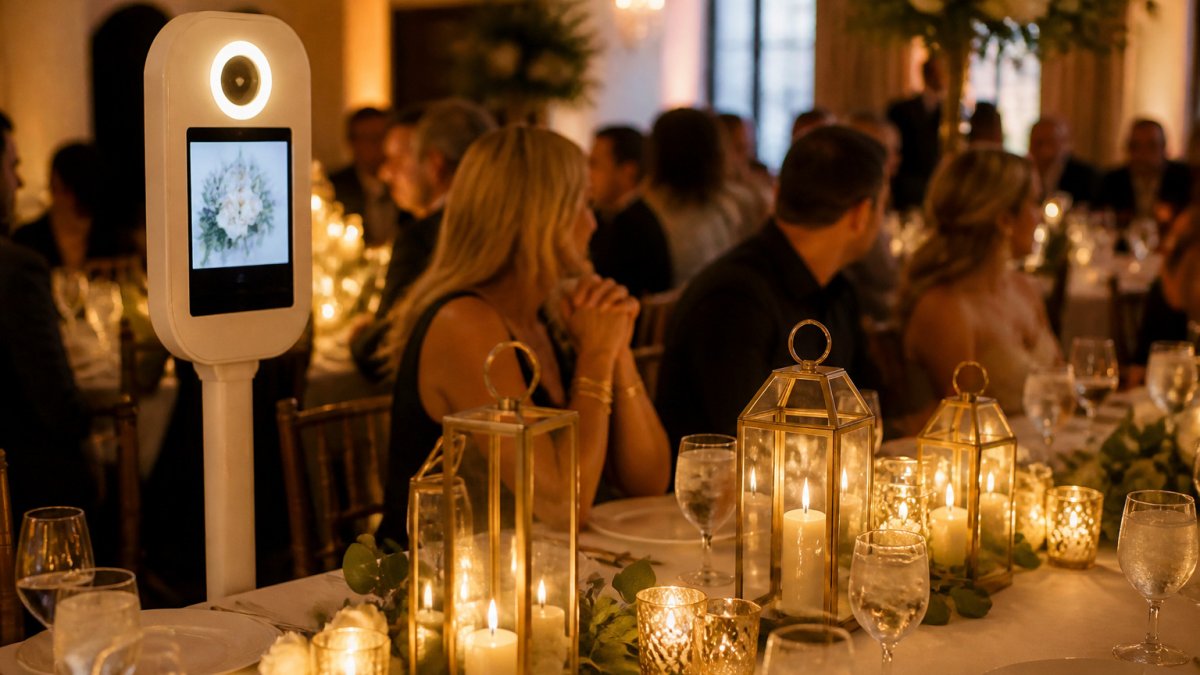
Clustered votives and pillars. A cluster of five to nine votives at varying heights reads as a single centerpiece. The tradeoff is that clusters need a tray or runner to keep wax off the linen, and they take up more table real estate than a single vase. Keep the tallest pillar under about 6 inches so guests can still see across the table.
Lanterns and hurricanes. Glass lanterns protect the flame from air movement, which matters near doors, on patios, and under ceiling fans. They also let you use a real flame in rooms where a bare candle would be a liability. A common pattern is one large lantern flanked by two smaller ones, or a lantern paired with a low greenery ring so the table does not look bare.
Floating candles. Floating candles in a glass bowl or cylinder give you height without a tall stem, which makes them a useful middle option on round tables. The mechanism is simple: the wax floats on water, so the flame sits above the rim and the bowl reads as taller than it is.
When to switch to battery-powered candles. LED pillars and votives have improved enough that guests rarely notice the difference at a distance, and they solve three problems at once: no open-flame restriction, no wax on linens, and no relighting. The tradeoff is that cheap LEDs flicker in a visible pattern and look flat in close-up photos. If the photo booth or a photographer will shoot the tables, choose LEDs with a warm-white tone and a realistic flicker rather than the cool-blue versions sold for holiday decor.
Height and sightlines. Candle height follows the same rule as floral height: go low (under about 6 inches) or clearly tall (above about 24 inches), and avoid the middle zone where the flame sits at eye level for seated guests. Floating candles in a tall cylinder are the easiest way to get the tall look without a floral stem, because the glass is narrow and guests can see past it.
Practical setup notes. Light candles shortly before guests are seated, not hours ahead, so the wax lasts through dinner and dancing. Keep arrangements away from table linens that drape, from paper menus and place cards, and from floral foam, which is flammable. If children are attending, place lit arrangements toward the center of the table rather than the edge.
Tall Wedding Centerpieces: When Height Works and When It Blocks Sightlines
Tall centerpieces make a bold statement, especially on long banquet tables. They work best when guests sit on opposite sides of a table that is wide enough for conversation to pass over the arrangement.
The risk is the middle-height zone. Arrangements that sit between about 12 and 18 inches can block eye contact across the table. Experts recommend going either low or clearly tall, a point made in the banquet table setting guide for weddings and events. Test the height by sitting at the table and checking whether you can see the person across from you.
The height of a centerpiece decides whether guests can see each other across the table, so the article's guidance comes down to a few key numbers.
| Height zone | Effect on guests | Guidance |
|---|---|---|
| Under about 12 inches | Keeps conversation open | Go low |
| About 12 to 18 inches | Blocks eye contact across the table | Avoid this middle zone |
| Above about 24 inches | Lets guests see underneath | Go clearly tall |
| Between 12 and 18 inches | Lands at a seated guest's eye level | Test by sitting at the table |
Low Wedding Centerpieces for Conversation-Friendly Tables
Low centerpieces keep the conversation moving. Short arrangements in bowls, mason jars, or compact vases let guests see each other clearly, which matters most at round tables where everyone is close together.
Low designs also suit compact tables and small receptions. Pair them with a table runner and a few candles for a finished look without adding height.
Non-Floral Wedding Centerpieces and Their Cost Tradeoffs
Non-floral options can lower costs. Lanterns, greenery-only arrangements, terrariums, and stacked books typically cost 30 to 50 percent less than fresh-floral designs, according to Paperlust's 2026 centerpiece analysis.
The tradeoff is texture and color. Florals add color that greenery alone cannot match, so many couples mix a few stems into a mostly non-floral display. Greenery and book stacks also hold up well if you plan to reuse decor or keep the look neutral across several events.
Matching Your Centerpiece Style to Your Theme and Table Shape
The part that decides whether a style works is the table it sits on and the room it sits in.
Start with the table shape. The footprint of the table sets how much centerpiece you can fit without crowding place settings.
- Round tables (typically 60 to 72 inches across). A single low, full arrangement in the center works best, because guests are seated all the way around and a tall piece blocks someone no matter where it sits. A 60-inch round comfortably seats eight; a 72-inch round seats ten. Leave at least 12 inches of clear space between the centerpiece and the nearest place setting so guests have room for glassware and elbows.
- Long banquet tables (typically 30 to 36 inches wide). A row of smaller pieces or one tall statement both work, but the row is usually the better choice because it lets guests see over the arrangement along the length of the table. Space smaller pieces roughly 18 to 24 inches apart so the row reads as continuous rather than scattered.
- Narrow or cocktail-style tables. Skip anything with a wide base. A single tall, narrow vase or a pair of slim candles keeps the surface usable.
- Sweetheart table. One focal arrangement, sized to the table rather than the room, so the couple is not hidden behind it in photos.
Then check the sightlines. The general rule of thumb is to go low or clearly tall and avoid the middle. An arrangement that sits between roughly 12 and 18 inches above the table lands at eye level for a seated guest and forces people to lean to talk. Low arrangements (under about 12 inches) keep conversation open. Tall arrangements (above about 24 inches, with the visual mass at the top) let guests see underneath. Test it by sitting at a mock table and checking whether you can see the person across from you without moving your head.
Then match the room. A centerpiece that looks generous in a small room can disappear in a large one, and the reverse is also true.
- Large ballrooms and high ceilings. Tall arrangements and tall candle cylinders hold their own against the scale of the room. Low-only tables can look sparse under a 20-foot ceiling.
- Tents and barns. Low, textured arrangements and lanterns suit the lower ceilings and rustic surfaces. Tall pieces can crowd a tent peak.
- Restaurants and small venues. Compact low arrangements and single candles keep the table usable and the room from feeling cluttered.
- Outdoor ceremonies and patios. Weighted bases and enclosed flames matter more than height, because wind and uneven surfaces are the real risk.
Then match the theme and palette. The style should follow the venue, not fight it.
- Classic and ballroom. Mercury glass, white and blush florals, low gold or silver vessels, and enclosed candles.
- Rustic and barn. Wood slices, mason jars, greenery, and lanterns, with low, loose arrangements.
- Modern and minimalist. Monofloral arrangements, single stems in slim vases, and clean candle cylinders in a single color.
- Garden and romantic. Garden roses, trailing greenery, and low, full arrangements that let guests see across the table.
- Bohemian. Mixed textures, dried elements, and mismatched vessels, kept low so the table stays conversational.
Then plan for the photo booth. Centerpieces and the booth share the same photos, so decide the table look before you book. A booth placed near a candlelit or floral-heavy area gives guests a natural gathering point after dinner, and a backdrop in the same palette as the tables keeps the reception photos cohesive.
Booking Your Reception Look With Couture & Decor Social Events LLC
Couture & Decor Social Events LLC provides photo booth rentals for weddings, corporate events, and parties, with custom templates. Pricing depends on the date, the event length, and delivery, so contact the team for a current quote.
Frequently Asked Questions
What are the most popular wedding reception centerpiece styles?
Floral arrangements with garden roses and greenery, candlelit designs using votives or floating candles, and non-floral options such as lanterns and book stacks are among the most common. Rustic, bohemian, classic and minimalist looks each have their own version of these pieces.
How tall should wedding reception centerpieces be?
Experts commonly recommend keeping centerpieces either low or clearly tall so they do not block guest sightlines in the middle height range, which can interrupt conversation across the table. Low arrangements work well for long banquet tables where guests sit across from one another. Tall designs suit round tables with enough space and can add drama when guests sit only on one side. Test your choice by sitting at the table to check that you can see the people across from you.
What are alternatives to floral wedding centerpieces?
Lanterns, greenery-only arrangements, terrariums and stacks of books are popular non-floral options. Industry coverage for 2026 reports that these alternatives typically cost 30 to 50 percent less than fresh-floral arrangements, though actual pricing depends on quantity, materials and delivery. Mercury glass vases paired with lace runners offer a textured look without fresh flowers. Non-floral pieces can also be reused for other events.