 comparison
DIY Event Decorations Cost Comparison
Table of Contents
- DIY Event Decorations Cost Comparison: What You Need to Know
- DIY vs. Renting Event Decorations: Breaking Down the Real Costs
- Event Decoration Cost Breakdown: Where Your Money Goes
- Event Decor Rental Checklist: What to Compare
- Buying Decorations Outright: When It Makes Sense
- Full-Service Decor: The Professional Option
- How to Choose the Right Approach for Your Event
- Frequently Asked Questions
Last Updated: October 16, 2026
DIY Event Decorations Cost Comparison: What You Need to Know
When planning an event, decoration costs can quickly spiral out of control. Understanding the true expense of DIY event decorations cost comparison helps event planners make informed decisions about whether to handle decorations themselves, rent from vendors, purchase items outright, or hire full-service professionals. The choice depends on multiple factors: your budget, available time, skill level, event size, and how often you plan to host events.
The most common misconception is that DIY decorations automatically save money. In reality, the calculation is far more complex. Hidden costs, storage, delivery, setup labor, and equipment rentals, often erase the savings that seem obvious at first glance.
This guide breaks down the real expenses across all four approaches so you can compare apples to apples and choose the option that actually fits your situation and budget.
DIY vs. Renting Event Decorations: Breaking Down the Real Costs
DIY event decorations cost comparison reveals that the cheapest upfront option is rarely the cheapest overall. When you handle decorations yourself, you're responsible for materials, supplies, labor, storage, and transportation. Renting shifts many of those costs to the vendor, but the per-event price is higher.
Materials and Supplies for DIY Decorations
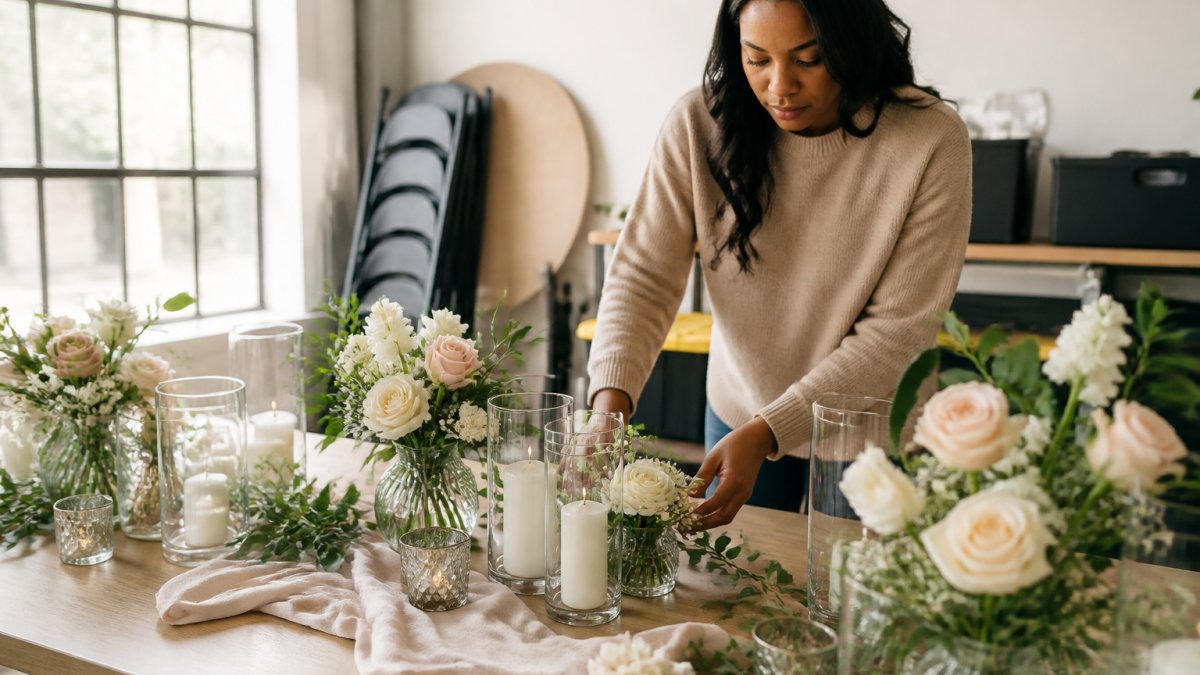
Purchasing materials for a single event means buying at retail prices without bulk discounts. Flowers, linens, lighting, vases, lanterns, and decorative accents add up quickly. A modest 50-guest wedding might require centerpieces for 8-10 tables, uplighting for a reception space, and entrance decor.
The challenge with DIY is that you often buy more than you need. Bulk pricing kicks in at quantities most one-time event hosts don't reach.
Hidden Costs You Cannot Ignore
Most DIY budgets overlook several expense categories that appear only when you start executing the plan. Storage costs matter if you're decorating weeks in advance and need space for materials. Transportation costs arise if you're renting a truck or making multiple supply runs.
Cleanup is another line item. Whether you're disposing of materials or returning rental items, that time and effort have a cost. Equipment rentals, tables, chairs, lighting rigs, ladders, extension cords, are often necessary even for DIY decorations.
Event Decoration Cost Breakdown: Where Your Money Goes
Understanding where decoration budgets actually go helps you allocate resources wisely. The typical breakdown spans five categories: materials and supplies, labor, equipment rentals, delivery and setup, and storage or disposal.
Labor and Time Investment
Time is the largest hidden cost in DIY decorating. A single person working alone can spend 8-12 hours preparing, arranging, and installing decorations for a medium-sized event. If you're paying someone to do this work, that's a significant labor expense.
Small events under 50 guests may require 4-6 hours of labor. Medium events (50-150 guests) typically need 8-12 hours. Large events (150+ guests) often require 16+ hours and may need multiple people working simultaneously. This labor compounds when you factor in shopping time, material prep, and cleanup afterward.
Storage, Delivery, and Setup Expenses
If you're decorating weeks before an event, storage becomes necessary. Renting a storage unit or using garage space has a cost, even if you don't think of it as money out of pocket. Delivery costs depend on where materials are purchased and where they need to go. Setup expenses include equipment rentals (ladders, dollies, extension cords) and the labor to install everything.
For a 100-guest event, delivery and setup labor can easily range from several hundred dollars to over a thousand, depending on complexity. Rental equipment, lighting rigs, specialty tables, or structural elements, adds to this total. These costs exist whether you're doing DIY or hiring professionals, but DIY budgets often underestimate them.
Event Decor Rental Checklist: What to Compare
Renting shifts the labor, storage, and replacement burden to the vendor, but the quoted per-event rate is only one line of the invoice.
1. Setup and breakdown: included or additional? Some vendors bundle installation and teardown into the rental rate; others bill it as a separate labor charge based on crew size and hours.
2. Delivery distance and fees. Delivery is usually priced by round-trip mileage from the vendor's warehouse, with a fuel or after-hours surcharge for weekend and evening drop-offs.
**3.
4. Minimum order values and event minimums. Many vendors set a minimum rental total or a minimum number of items, which matters most for small gatherings.
5. Date availability and hold policies. Peak Saturdays book out months ahead. Ask how long a quote is held, whether a deposit locks the date, and what the cancellation window is.
6. Customization options. Color, size, and finish options vary by vendor and by inventory batch. Confirm whether custom items are made to order (longer lead time, non-refundable) or pulled from existing stock.
7. Return deadlines and late fees. Rental periods are typically counted in days, not hours, and late returns are billed per item per day.
8. Inventory depth. A vendor with 40 lanterns cannot fill an order for 60, and substitutions at the last minute rarely match.
Rental makes sense when you are hosting a one-time event and do not want to own, store, or maintain inventory. The per-event rate is higher than buying materials outright, but once delivery, setup labor, deposits, and cleanup are included, the all-in total is frequently lower than a true DIY accounting. Rental also transfers breakage risk: if an item is damaged during normal use, the vendor replaces it rather than you absorbing the loss.
The catch is that rental quotes are not standardized, so the only reliable comparison is line by line.
Buying Decorations Outright: When It Makes Sense
Purchasing decorations makes financial sense only if you plan to reuse them across multiple events or have a long-term use case. A couple decorating their own wedding might buy some items they'll use later at home. Event professionals or businesses hosting recurring events can justify the upfront investment.
When you buy, you own the inventory. That means storage responsibility, maintenance, and the risk of items becoming outdated or damaged. Resale value is typically 20-40% of original purchase price, which factors into the true cost calculation. Break-even analysis shows that buying only becomes cheaper than renting after 3-5 uses of the same items, depending on purchase price and rental costs.
The decision to buy should account for storage space, maintenance requirements, and realistic frequency of use. A business hosting quarterly corporate events might buy core decorative elements and rent specialty items for each occasion.
Full-Service Decor: The Professional Option
Full-service means one contract covers design, sourcing, delivery, installation, and teardown. You are not buying centerpieces; you are buying the labor, logistics, and risk management that surround them. That distinction is why full-service quotes rarely break down the way rental or DIY budgets do.
What is actually in the scope A typical full-service proposal includes a design concept, a sourcing plan, on-site installation by a crew, and same-night or next-morning breakdown. It usually also includes contingency: extra candles, backup linens, and a person on call if something fails during setup.
How full-service is priced Most professionals price on a combination of design fee, materials at a markup, and labor hours for install and strike. The design fee is often a flat percentage of the materials budget or a fixed retainer, and it is frequently non-refundable.
Where the money actually goes The premium over rental or DIY is not the flowers or the fabric. It is the coordination: sourcing from multiple suppliers, scheduling delivery windows around venue access rules, managing setup within the venue's load-in window, and absorbing the cost when a supplier ships the wrong color. That coordination is the product.
When full-service is the right call
- The venue has strict load-in and load-out windows that require a professional crew to hit.
- The event is high-stakes enough that a failed setup has real consequences (a wedding ceremony, a client-facing corporate function).
- Your available time before the event is measured in evenings and weekends, not workdays.
- The design depends on structural elements (rigging, drapery, lighting) that carry safety and liability considerations.
When it is not If the event is casual, the venue is flexible, and you have a reliable crew of helpers, the coordination premium buys you less. The same is true if you already own core inventory from prior events, since full-service vendors will still charge for sourcing items you already have.
The practical test is simple. List every task between now and the end of the event, assign an owner to each, and count how many land on you. If the answer is most of them, and the event date is fixed, full-service is usually the lower-risk choice even at a higher quoted number.
How to Choose the Right Approach for Your Event
The best decoration approach depends on four factors: your budget, available time, event frequency, and desired outcome quality.
Budget-first decision: If budget is the primary constraint, calculate the true cost of each option including labor, storage, and hidden expenses. DIY appears cheaper until you add these items. For a one-time event, rental often costs less than true DIY when labor is accounted for.
Time-first decision: If you have limited time to prepare, renting or hiring professionals reduces your workload. DIY requires significant time investment for shopping, prep, and setup. If your time is valuable, outsourcing makes financial sense.
Frequency-first decision: If you host events regularly, buying core decorative elements and renting specialty items creates an efficient hybrid approach. One-time event hosts should rent or hire professionals rather than buy.
Quality-first decision: If the event's appearance is paramount, professionals deliver the best results. DIY and rental can produce excellent outcomes but require more planning and execution skill. Full-service removes that risk.
The most common mistake is choosing DIY based on perceived cost savings without calculating true expenses. The second mistake is choosing rental without comparing it to full-service, which sometimes costs only slightly more and delivers significantly better results.
Understanding DIY event decorations cost comparison means looking beyond material prices to total expenses. When you account for labor, storage, delivery, and setup, the savings from DIY often vanish. Renting shifts costs to vendors but removes your storage and labor burden.
Frequently Asked Questions
Is it cheaper to make or rent event decorations?
It depends on your event size, timeline, and skill level. DIY decorations have lower upfront material costs but require significant labor and time. Rental options eliminate setup and breakdown work but charge per-event fees. Buying decorations outright makes sense only if you host multiple events yearly and can reuse items. For a one-time event, the total cost, including your time, materials, transport, and setup, often rivals or exceeds rental pricing.
What costs should I include when comparing DIY decorations with rentals?
A complete DIY event decoration cost breakdown must include materials and supplies, labor hours (valued at your hourly rate or opportunity cost), storage space, transport to and from the venue, delivery fees if ordering supplies, setup and breakdown time, and cleanup. Rental comparisons should factor in the rental fee itself, delivery and setup charges, damage deposits, and any taxes. Many people underestimate labor and hidden costs, making rentals appear more expensive than they actually are.
How much time does it take to make DIY event decorations?
Timeline varies widely by decoration complexity and event size. Simple centerpieces and table settings may take 10-20 hours total. More elaborate projects, custom signage, hanging installations, or themed decor for 100+ guests, can require 40-80+ hours spread across weeks. Add 4-6 hours for setup day and 2-3 hours for breakdown and cleanup. When you multiply hours by your hourly value, time costs often exceed material expenses.
What event decorations are worth renting instead of making?
Rental makes the most sense for items that are expensive to buy, require specialized equipment, or are used only once: uplighting, draping systems, specialty linens, large floral installations, and specialty furniture. These items have high upfront purchase costs but moderate rental fees. DIY remains practical for smaller items like centerpieces, paper decorations, and table accents where material costs are low and you have time to craft them.