 blog
blog
Couture Decor: Elevate Your Event with Photo Booth Rentals
Table of Contents
- What Is Couture Decor and Why It Elevates Events
- Choosing the Right Event Photo Booth Rental for Your Celebration
- Custom Photo Booth Templates That Match Your Couture Decor
- Digital Photo Sharing for Events: Keeping Guests Connected
- Your Photo Booth Rental Checklist for a Stress-Free Event
- Mistakes to Avoid When Pairing Couture Decor with a Photo Booth
- Mistake 1: Choosing the Booth Before the Room
- Mistake 2: Letting the Template Fight the Room
- Mistake 3: Ignoring Sourcing and Material Quality
- Mistake 4: Skipping the Lifestyle and Space Fit
- Mistake 5: Underestimating the Rental Window
- Mistake 6: Booking Without a Backup Plan
- A Quick Fit Check Before You Sign
- Conclusion
- Frequently Asked Questions
Last Updated: October 12, 2026
What Is Couture Decor and Why It Elevates Events
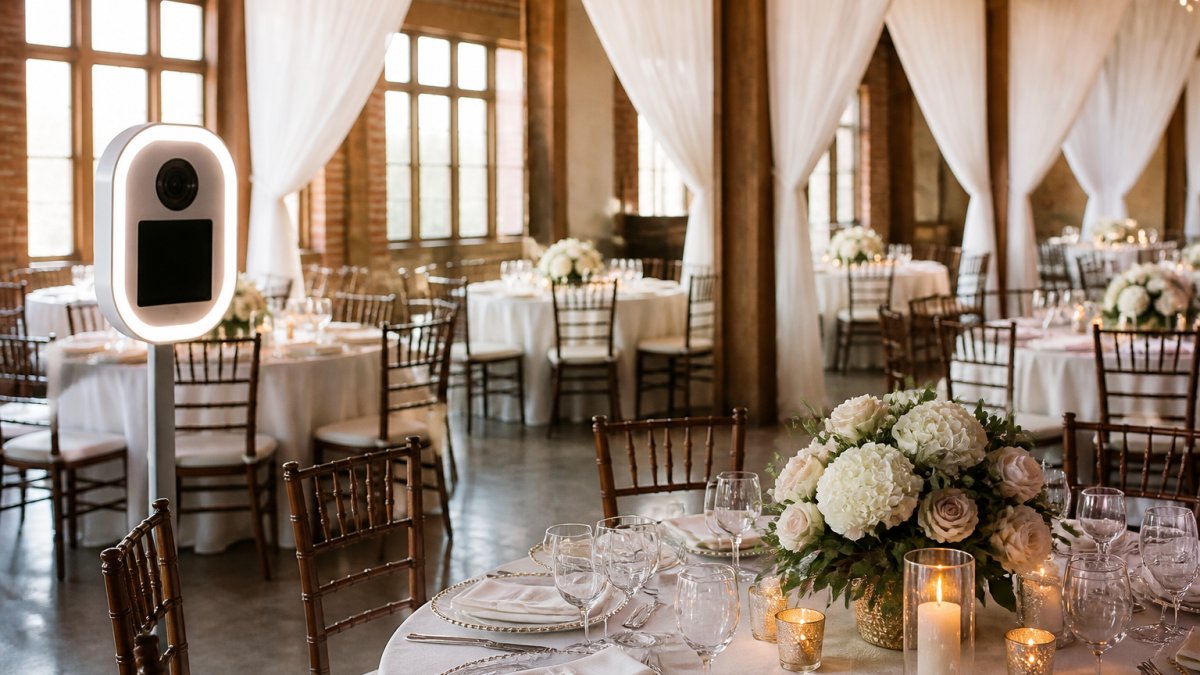
Couture decor treats an event's visual design like a made-to-measure garment: every element is fitted to the occasion rather than pulled from a rental catalog.
A standard banquet setup looks fine in person and flat in photos.
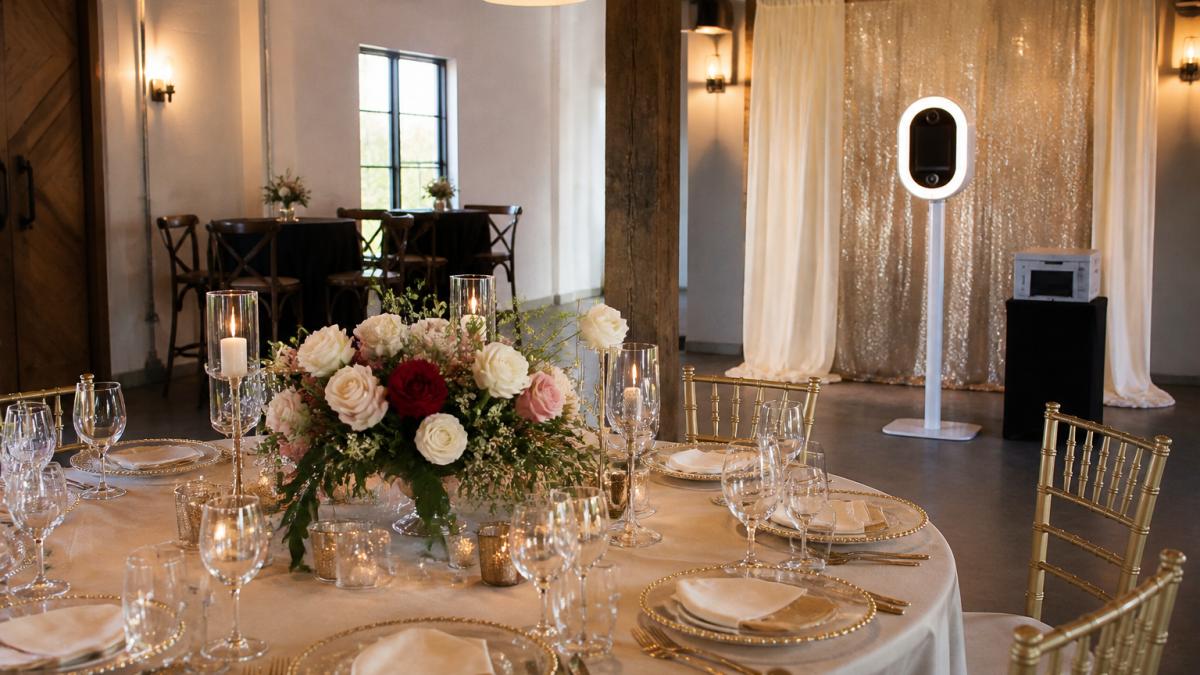
Decor sets the stage, but a photo booth turns that stage into something guests actually use.
Choosing the Right Event Photo Booth Rental for Your Celebration
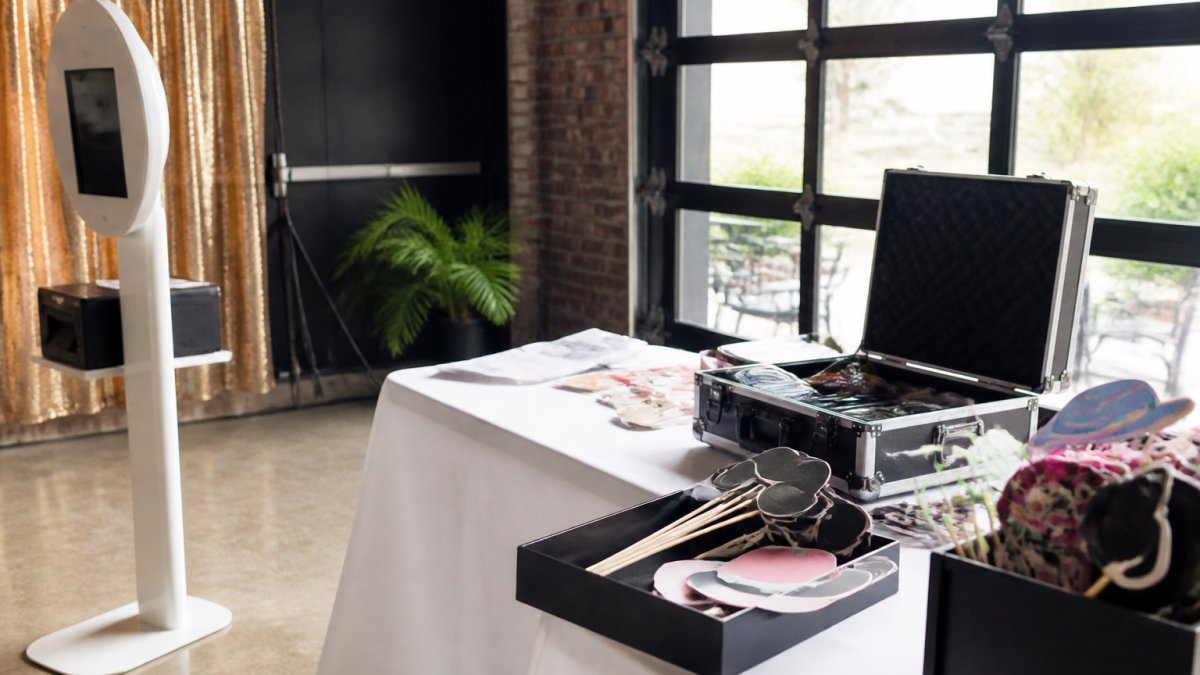
The right event photo booth rental matches three things: your venue's layout, your guest count, and the look you've built with your decor. Align all three and the booth becomes part of the design; miss one and it feels bolted on.
| Booth Type | Space Needed | Best For | Guest Experience |
|---|---|---|---|
| Open-air | Larger footprint, open floor area | Large weddings, corporate mixers | Guests see the action, easy group shots |
| Enclosed | Compact corner or alcove | Intimate parties, smaller venues | More privacy, classic booth feel |
Neither option is better in the abstract. An open-air booth suits a ballroom with room to spread out. An enclosed booth fits a restaurant back room where floor space is tight.
Open-Air vs. Enclosed Booths: Which Fits Your Venue?
Open-air booths use a freestanding backdrop and lighting rig with no walls, so they photograph large groups and let guests watch; they need more floor space and work best anchored by a natural corner or alcove. Enclosed booths give guests a private, curtained space and suit venues without a wide footprint, but fit fewer people per shot and are less visible.
Questions to Ask Before You Book
Before signing anything, ask these five questions. The answers tell you whether a provider is organized or improvising.
- How much setup and breakdown time do you need, and does that overlap with my event?
- What's your backup plan if a printer, tablet, or connection fails mid-event?
- Do you provide a dedicated attendant for the full rental window?
Custom Photo Booth Templates That Match Your Couture Decor
Custom photo booth templates are the design layer that ties a booth to the rest of your event. A template is the frame printed on each photo or digital image: the border, the monogram, the color band, the small text. Done well, it echoes your invitation suite and table design; done poorly, it looks like a sticker slapped on a picture.
Couture, Luxury, and Bespoke: What the Terms Actually Mean
The keyword gets used loosely, so it helps to separate three ideas.
- Couture-inspired decor borrows the look of made-to-measure design, layered textures, custom monograms, unusual finishes, but the pieces are produced in standard runs.
- Luxury decor signals material quality and grade of finish; a luxury item can be mass-produced.
- Bespoke decor is built to a single client's specification, with measurements, materials, and finish set for one event.
True couture sits at the intersection of bespoke and luxury: made for one client, at a high standard of craft. For a photo booth template, that means artwork drawn for your event rather than selected from a library.
What Separates a Couture-Grade Template from a Stock One
Four things separate them, and none is the color palette.
- Custom-drawn artwork vs. a modified library file. A couture template starts as a blank canvas; a stock template starts as a pre-built frame with your name dropped in.
- Print resolution and color fidelity. A template that looks crisp on screen can print soft if built at screen resolution. Ask what resolution the file is prepared at and whether the provider proofs a physical print.
- Finish and material. Matte, gloss, and metallic stocks each change how a template reads. Metallic or foil-finish stock catches light and pairs naturally with glam accents; matte reads quieter and suits soft, tonal palettes. Ask which stocks the provider offers and request a sample.
- Typeface licensing and consistency. A licensed display face matching your invitation suite looks intentional; a default system font looks improvised. Ask whether the provider can match your stationery typeface or source a close licensed equivalent.
How to Brief a Template That Matches Your Decor
Hand your rental provider the same palette and typeface you used everywhere else. If your tables use soft gray linen with silver accents, the template should carry those same gray tones and silver touches, guests notice the consistency even when they can't name it. A brief that gets results includes four things:
- Palette with hex or Pantone references, not color names.
- Typeface files or names, so the provider can match or source a licensed equivalent.
- Two or three required elements, names and date, a logo and campaign line, a milestone number and short phrase. More than three and the photo gets crowded.
Care, Durability, and What to Ask About Longevity
Prints are handled, pocketed, and sometimes spilled on. Ask how the provider's stock and ink hold up, whether prints are smudge-resistant, and how the digital gallery is archived. Confirm the retention window in writing.
Digital Photo Sharing for Events: Keeping Guests Connected
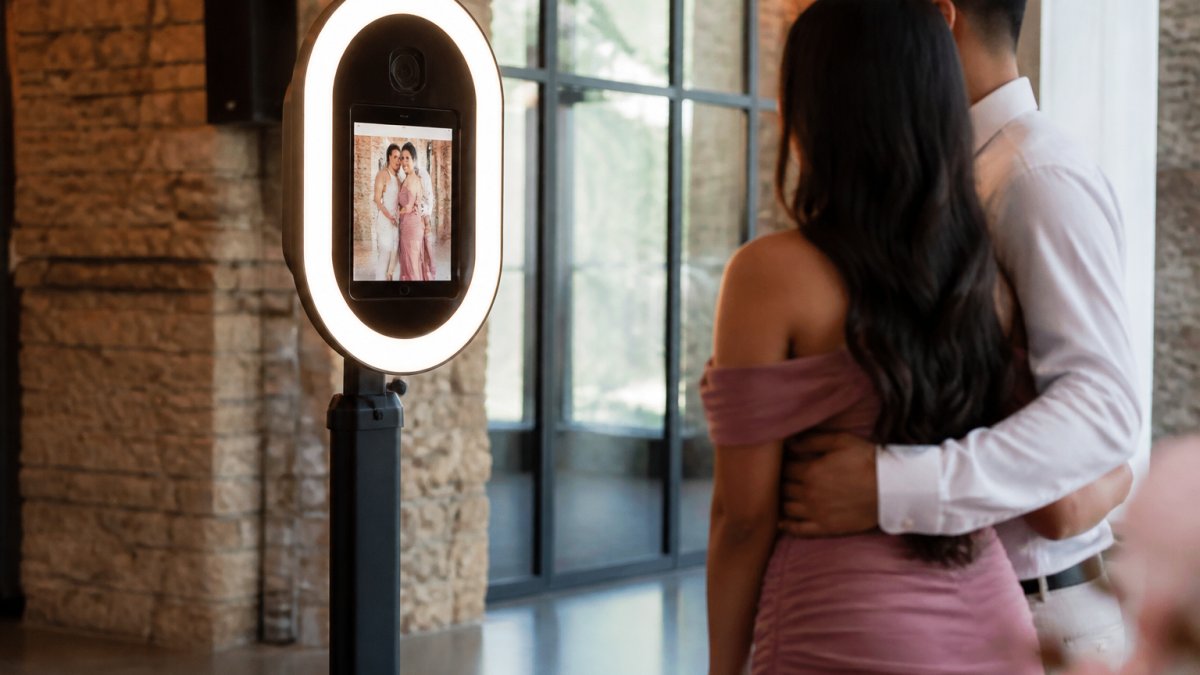
Digital photo sharing for events turns a booth from a party favor into a live part of the celebration. Instead of waiting for prints, guests scan, text, or email themselves the images, and photos spread while the event is still happening.
- Instant digital delivery by text or email
- On-site printing for guests who want a physical keepsake
- A shared online gallery that collects every photo in one place
Ask how long the gallery stays live: one that disappears in a week is a problem for anyone ordering reprints later, while one that stays up for months gives hosts a complete record.
Your Photo Booth Rental Checklist for a Stress-Free Event
A photo booth rental checklist keeps the booking from drifting into last-minute panic. Work through it in order, and the booth becomes one of the easiest parts of the event to manage.
- Confirm guest count and estimate how many will use the booth
- Measure available floor space and note ceiling height
- Choose open-air or enclosed based on venue layout
Two items get skipped most often: power access and venue restrictions. Some venues limit where equipment can go or which outlets can be used, so confirming both early avoids a surprise on setup day.
Mistakes to Avoid When Pairing Couture Decor with a Photo Booth
Most pairing advice stops at "don't hide the booth in a corner." The mistakes that actually cost hosts money and photos are structural: treating the booth as a separate purchase instead of part of the room's design logic. Here are the most common ones, with the fix for each.
Mistake 1: Choosing the Booth Before the Room
The booth's footprint, backdrop, and lighting should be selected against the room's dimensions and existing focal points, not in isolation. A common pattern: a host books an open-air booth for a ballroom, then finds the only viable corner sits under a low soffit that clips the backdrop. Measure usable floor space and ceiling height, note the room's focal points, and choose the format that fits.
Mistake 2: Letting the Template Fight the Room
If the room is built on gray tones and glam accents, a bright neon template fights everything around it. The deeper error is treating the template as a separate design project rather than an extension of the room's palette and type. Match the palette, typeface, and finish to the rest of the decor, and write the template brief alongside the stationery brief.
Mistake 3: Ignoring Sourcing and Material Quality
Couture decor is defined by craft, and craft is visible in materials. A backdrop that looks luxurious in a photo can be thin printed vinyl that wrinkles under event lighting; a linen drape can be a synthetic blend that photographs shiny. Ask what the backdrop and soft furnishings are made of, how they are cleaned, and how they hold up over a multi-hour event.
Mistake 4: Skipping the Lifestyle and Space Fit
A statement piece that suits a 4,000-square-foot ballroom can overwhelm a 900-square-foot restaurant back room. Match the booth's scale to the room and to how guests move through it. A booth on the main path to the bar gets bumped; one in a dead-end alcove gets ignored. The sweet spot is near a natural gathering point, the entrance, dance floor, or cocktail area, with clearance for a small group to pose.
Mistake 5: Underestimating the Rental Window
Guests use a booth most during the first hour after dinner and again near the end of the night; a window that is too short misses one of those peaks. Lock the rental window to your timeline and confirm setup and breakdown times in writing.
Mistake 6: Booking Without a Backup Plan
A booth that goes down mid-reception with no spare equipment turns your best photo moment into a dead corner of the room. Ask what happens if a printer, tablet, or connection fails, and whether a dedicated attendant is on site for the full rental window. Get the answer in writing.
A Quick Fit Check Before You Sign
Run this five-point check against any provider before you commit:
- Does the booth format fit the room's floor space and ceiling height?
- Does the template brief include palette, typeface, finish, and a physical proof?
- Can the provider answer material and care questions for backdrops and prints?
If a provider can answer all five, the booth stops being a logistics item and becomes part of the room's design.
Conclusion
Couture decor and a photo booth solve the same problem from two directions: one makes the room worth looking at, the other makes it worth participating in. When the booth's placement, template, and sharing options are planned alongside the design rather than after it, the two reinforce each other. Measure the space, match the template to your palette, confirm the backup plan, and lock the rental window to your timeline, and the booth becomes part of the experience guests remember.
Frequently Asked Questions
What does couture decor mean for an event?
A high-quality event aesthetic refers to a design approach where every detail is chosen with intention. Rather than buying pre-packaged themes, you build a cohesive look that feels elevated and uniquely yours. Pairing a photo booth that matches your palette and templates creates a seamless guest experience from arrival to farewell.
How is couture decor different from standard event decor?
Standard event aesthetics often rely on rental catalogs and repeatable setups. A personalized event aesthetic focuses on customization that works for your specific venue and guest count. The difference shows in the details, like a custom photo booth template that echoes your invitation font or a digital sharing gallery that carries your event hashtag. This level of personalization makes the event feel curated rather than assembled from a checklist.
Can photo booth templates be customized for my event theme?
Yes. Custom photo booth templates let you incorporate your names, wedding date, monogram, or brand logo directly into the photo strip or digital overlay. You can match fonts and colors to your invitations, signage, or couture decor palette. Many providers offer a proofing step so you see the template before the event. This small detail ties the photo booth into the overall design instead of making it feel like an afterthought.
What should I look for in a photo booth rental checklist?
A solid photo booth rental checklist covers venue space and power access, guest flow and placement, template approval deadlines, digital sharing options, and setup/breakdown times. Confirm whether the provider handles delivery and whether an attendant stays for the duration. Ask about backup equipment and how images are delivered after the event. Building these items into your planning timeline prevents last-minute surprises and keeps your event's aesthetic intact.